• Hiking Mount Zas, Naxos: The Beautiful Feeling of Being on Top of the World

    Hiking Mount Zas, Naxos: The Beautiful Feeling of Being on Top of the World

    Some hikes are about reaching the summit. Others are about everything you feel along the way. Hiking Mount Zas on the Greek island of Naxos was definitely one of the second kind, and it reminded me why I love getting lost in nature.

    Mountains have always drawn me in. Maybe it’s the silence. Maybe it’s the feeling of leaving the world behind, even if only for a few hours. Or maybe it’s that moment when you finally reach the top, look around, and realize how small your everyday worries really are.

    On Naxos, surrounded by whitewashed villages, turquoise water and sun-drenched landscapes, stands Mount Zas, the highest mountain in the Cyclades. And somewhere between its rocky paths, endless views and the wind brushing against my face, I found my most cherished memory of Naxos.

    A Different Side of Naxos

    When you imagine a Greek island, you probably picture beautiful beaches, charming white houses and long afternoons by the sea. Naxos has all of that. But what makes it so special is how much there is to discover beyond the coastline.

    Mount Zas rises 1,001 meters above sea level and gives you a completely different perspective on the island. It’s named after Zeus, king of the Greek gods, and is said to be the place where he grew up. There’s something magical about hiking somewhere with so many stories hidden in the landscape.
    How to Get There

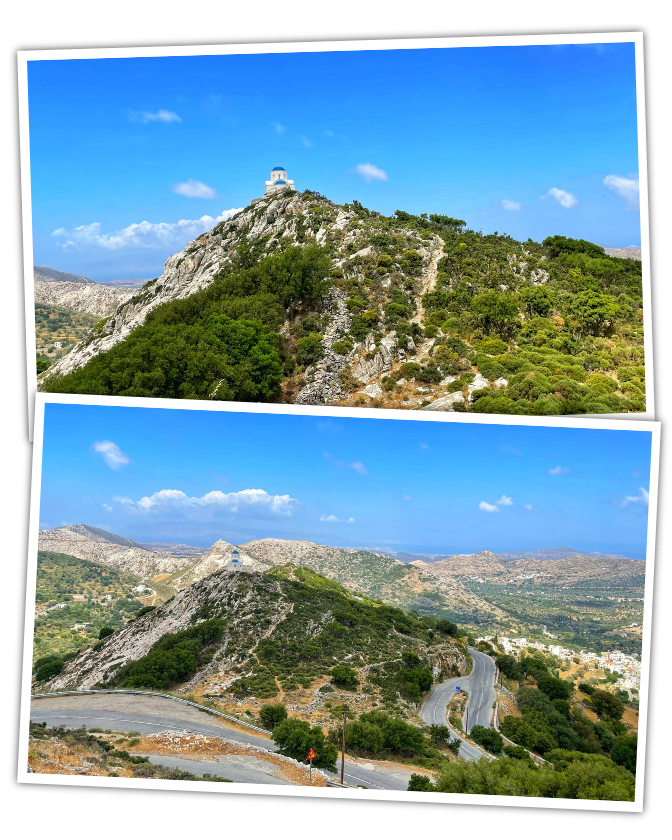
    To reach the starting point near Agia Marina, I took the public bus from Naxos Chora. It goes through Filoti, the nearest village, and has a stop at Agia Marina. It only runs a few times a day, so plan ahead and start early. Make sure to also check the last bus to take you back – when I was there, it was leaving Filoti around 4pm, which is rather early.

    Making New Friends

    When I got off the bus, I noticed I wasn’t alone. Four others had made the same plan as me. Shortly into the hike we started chatting, and it turned out they were a group of friends from Canada. Since Canada is a wonderful destination on its own, the conversation flowed easily.

    I usually do these hikes alone, but I enjoyed the company, and it made the day a little more special. That’s the thing about traveling solo: making friends is easy if that’s what you want.
    The Ascent

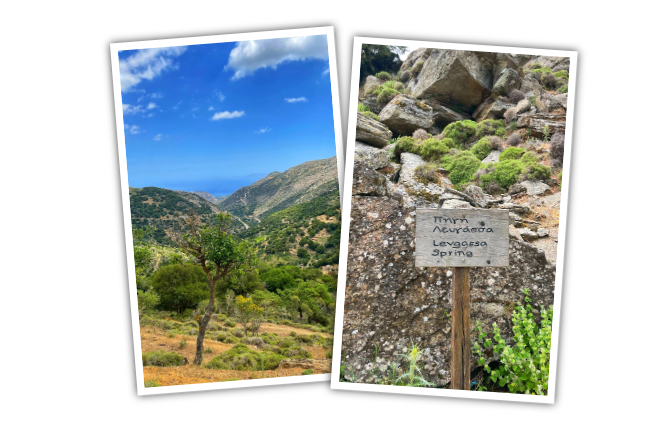
    One thing to know about Greece is that the paths aren’t always easy to spot. Most of them are poorly marked, so I usually rely on an online map to make sure I’m going the right way. This hike was no different. At one point there was a fork in the path and we all stopped to discuss which way to go. When hiking in the mountains, it’s safe to say the right way usually leads up, even if it hurts and you really wish it would lead somewhere else 😊

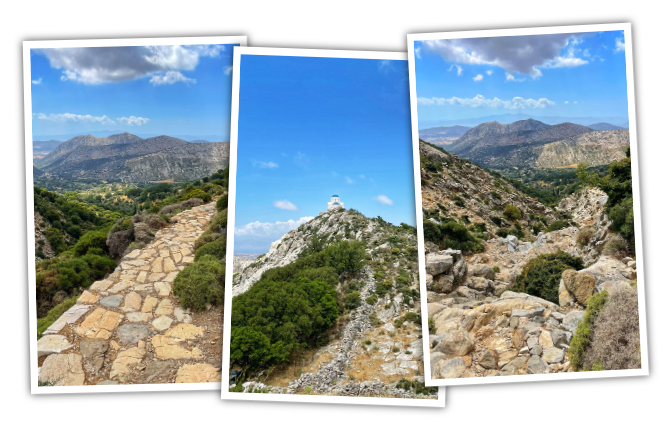
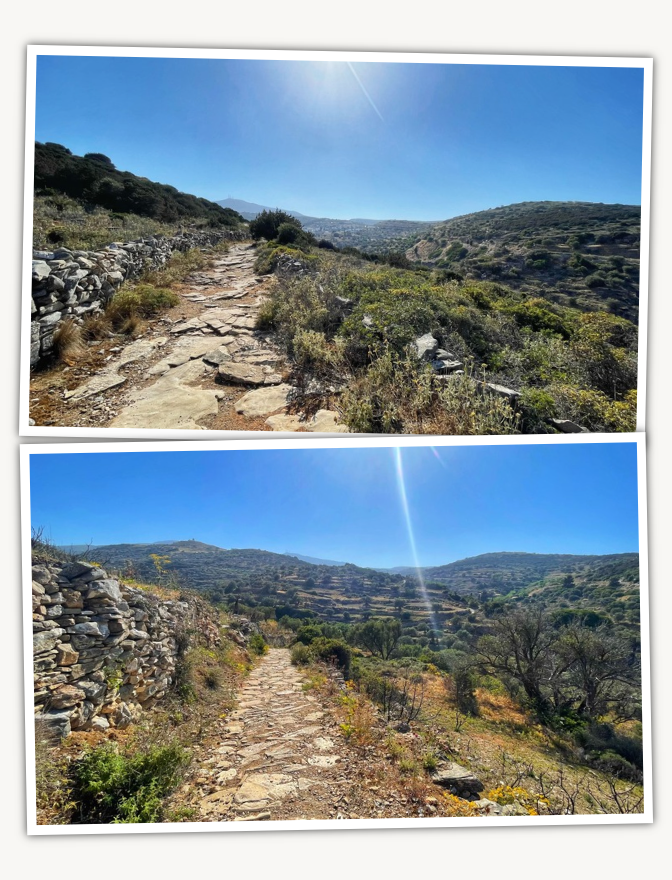
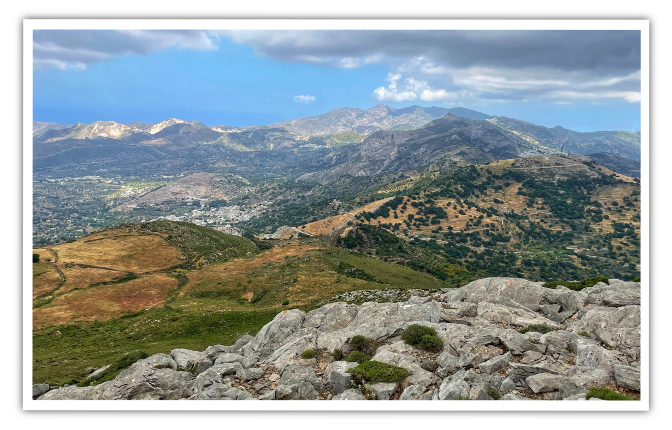
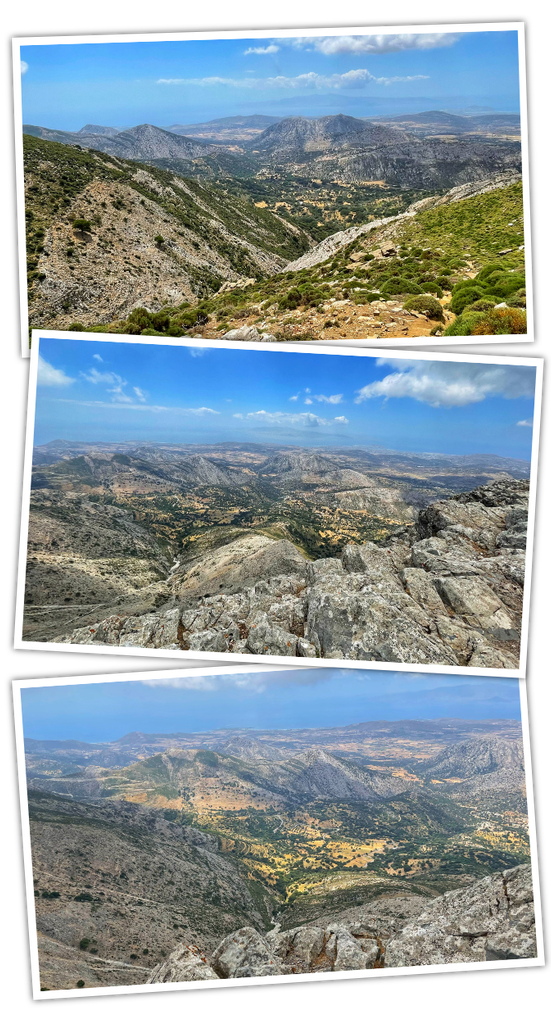
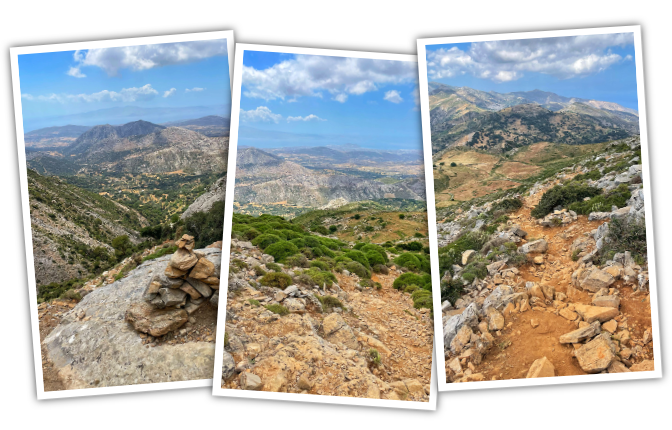
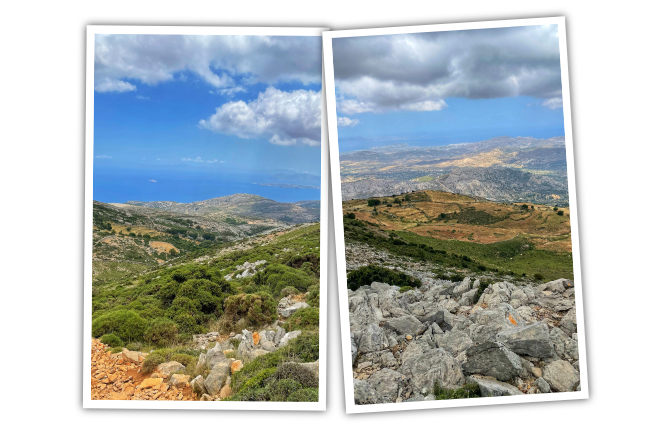
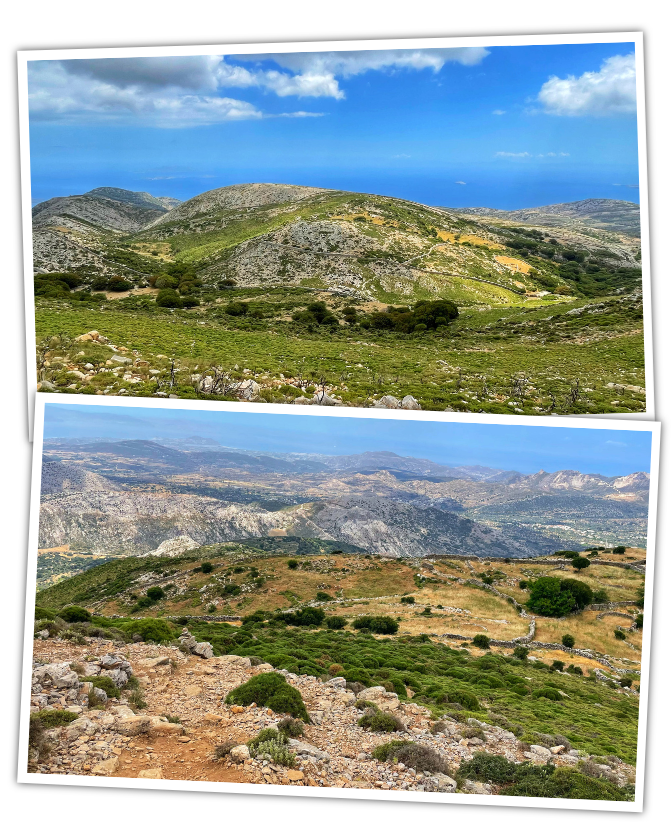
    The path up Mount Zas is rocky, with stretches that demand your attention. As you keep climbing, the paths get narrower and steeper, though you’re still mostly walking on grass and shrubs. The higher you go, the more the landscape opens up, and near the top you’re surrounded almost entirely by stone. The hills on the horizon seem to fold into one another, and the villages below get smaller with every step.

    At some point, you stop thinking about how far you still have to go. You simply become part of the moment: the sound of your footsteps on the stones, the warmth of the Greek sun, the breeze that arrives just when you need it. It’s a kind of peace that’s hard to explain to someone who hasn’t experienced it.
    Reaching the Top

    Just before you get there, you’ll probably wonder why you thought climbing a mountain during a Greek island holiday was a good idea. It’s hot. It’s dusty. There’s no wine bar at the end, no beach, no white sand, no dip in the clear water.

    But then you arrive. You close your eyes for a moment, slow your breathing, and when you open them again it hits you: you made it. You find a spot to the side with a nice view, sit down, and spend long minutes staring into nothing and everything at the same time. The views are so beautiful that the pain of the last few hours is instantly forgotten.

    This is exactly why I keep pushing myself to hike: the rush of emotions once you get to the top, and then the hour or so of doing absolutely nothing, because there’s nowhere else you need to be. Nowhere else you want to be. Just the sky, the wind, and the feeling of being exactly where you’re supposed to be.
    Hiking Back Down With a Full Heart

    Eventually, it’s time to leave the summit behind, and somehow the walk down feels different. The mountain hasn’t changed, but something in you has. Maybe it’s the satisfaction of having made it. Maybe it’s the fresh air and movement, or just the simple joy of spending hours outdoors. Or maybe it’s that wonderful feeling of doing something that makes you feel alive.

    Usually, once you’ve reached your goal and turn back, the experience feels over before you’ve even finished walking. Not with Mount Zas. I decided to walk down the other side of the mountain that will later take us around the Zeus Cave.

    It was a great choice, but be warned: the first part of the descent is rather challenging and better suited to experienced hikers. You climb down over stones and boulders, and good shoes are a must. It was also the moment I realized I actually had some hiking experience. My Canadian companions fell behind me very quickly, so we said our goodbyes and went our separate ways.
    The Most Beautiful Views

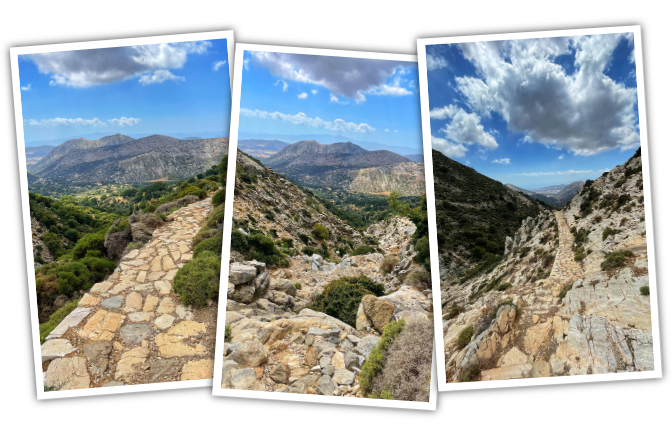
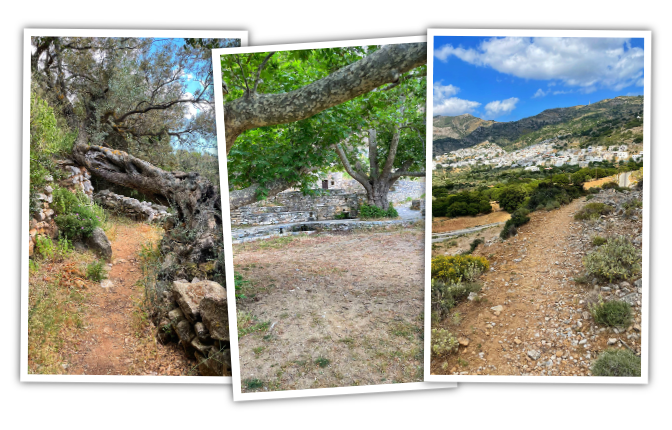
    As the trail winds toward the valley, the views that open up are possibly even more spectacular than the ones from the top. Soon you’re walking on a marble path that looks and feels incredibly ancient, and every couple of steps you have to stop to take it all in: the mountains in the distance, the valley right beside you, the blue sky, the dramatic summits all around, the green of the trees and shrubs. If I had to pick a single moment from the whole hike, this would be it.
    Zeus Cave

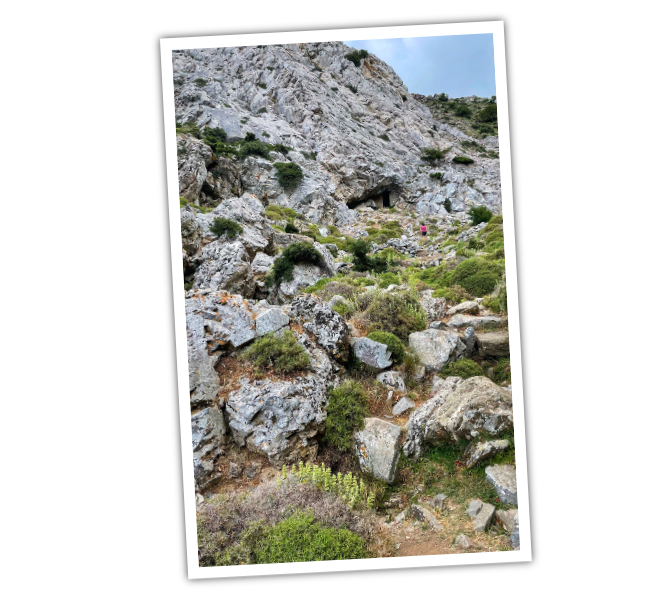
    Soon after you reach the valley, you’ll find the Zeus Cave on your right-hand side. It’s easy to walk straight past it, but if you look back, it’s hard to miss. Visibility inside is very low, so unless you bring a powerful torch, there’s not much to see (your phone light won’t cut it). Still, it’s worth ticking off your “to see” list. According to legend, this is where Zeus grew up and took refuge during his years on Naxos, hiding from his father, Kronos.
    The Last Steps

    Continue downhill from the cave and you’ll soon reach the Aria Spring. It’s a nice spot to rest: the trees give shade, and you can refill your water bottles before the last stretch. The rest of the way is smooth and uneventful. Soon after the spring, you’ll spot Filoti village in the valley below, and you know you’re nearly there. A glass of wine while waiting for the last bus of the day is a pretty nice reward after a hike like this (see, I got my wine bar after all).
    Practical Tips for Hiking Mount Zas

    If you’re planning to hike Mount Zas during your visit to Naxos, here are a few things worth remembering:

    Starting point: I’d recommend the route I took, starting at Agia Marina. The bus drops you off right there, beyond the village. The opposite direction starts near the Aria Spring, and you’d first have to walk there from Filoti. It also means the boulder section near the end becomes a climb up instead of down, which can be really tough.

    Difficulty: Moderate to challenging, depending on your route, the weather and your hiking experience. Expect rocky terrain and wear proper hiking shoes. No flip-flops or floppy sandals.

    What to bring: Good shoes, water and sunscreen. In high summer, definitely a hat too. A snack for the top is a nice bonus.

    Best time to hike: Spring or autumn, to avoid the summer heat. I did the hike at the end of May, and it was about 5-7 degrees Celsius cooler near the top than at the coast, so about 20 degrees, which was very comfortable.

    Timing: Leave yourself plenty of time to enjoy the climb, and keep the bus schedule in mind so you’re not rushing to catch the last one. The way down took me about an hour, but I was walking fast (remember, I left my Canadian friends behind 😊). I also spent around an hour just sitting at the summit, so I definitely wasn’t too rushed to be able to enjoy the hike, but still. My bus from Chora left around 11:00 am but I’d recommend the earlier one around 9:00. That gives you more time to explore Filoti after your hike.
    Final Thoughts

    Looking back, Mount Zas was the part of my Greek Island Hopping trip I keep coming back to. Not because it was the easiest day or the one with the best photos (okay, the views were pretty great), but because it gave me everything I love about hiking: a bit of effort, a lot of quiet, and that feeling of being exactly where you’re supposed to be. If you’re visiting Naxos and have a spare day, I’d really encourage you to trade the beach for the mountain, just once. Pack your good shoes, catch the early bus, and take your time at the top. And if you meet a few friendly Canadians along the way, even better 😊
    Planning more time in the Greek islands? Here’s more from my trip:

  • What to Do In Naxos: The Island of Quiet Villages, Mountain Hikes and Slow Days

    What to Do In Naxos: The Island of Quiet Villages, Mountain Hikes and Slow Days

    Naxos is the largest of the Cyclades, and it feels like a small world of its own. Sandy beaches stretch along one coast, while inland, green valleys, olive groves and marble villages climb toward the highest mountain in the Cyclades. There’s villages to get lost in, castles to hike up to, temples standing alone in the fields, and a family distillery that makes a liqueur found nowhere else. Naxos rewards anyone who rents a car or hops on a bus and heads inland, so give it a few days and let it show you both its faces, the lively harbor and the quiet hills.

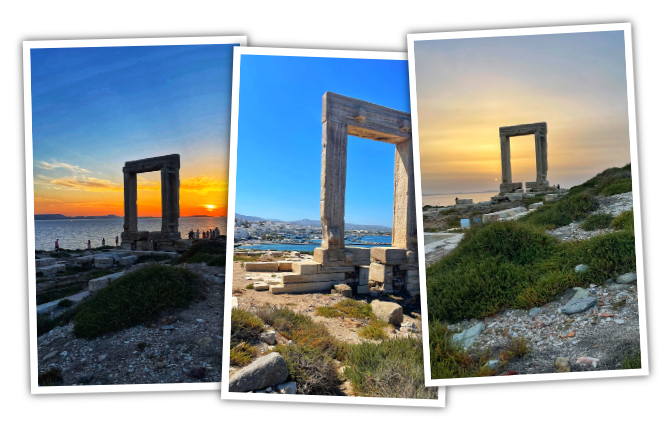
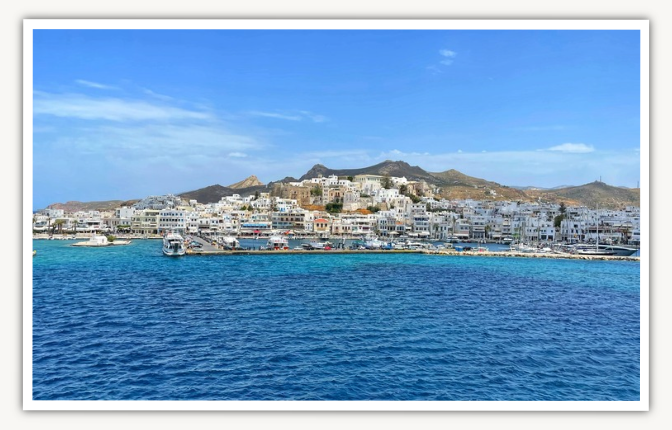
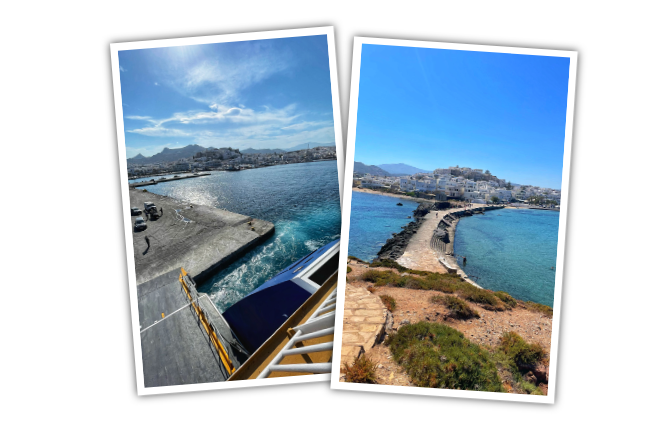
    Naxos arrival by ferry, Naxos view from Portara

    Naxos Chora

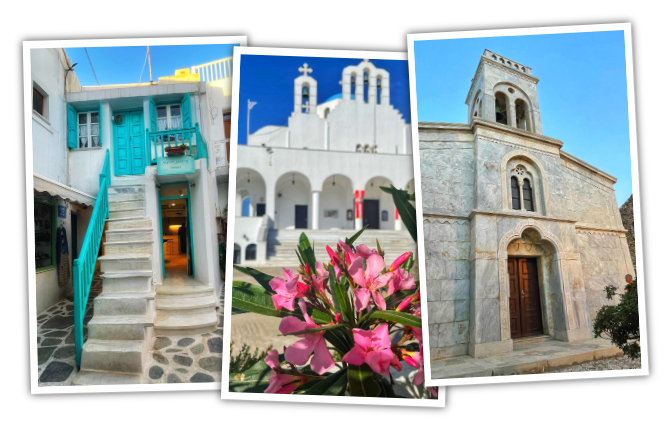
    Chora, the island’s capital, is where most visits begin, and it’s easy to see why. The harbor curls around a lively waterfront lined with cafés and tavernas, and behind it the town rises in a tangle of whitewashed lanes, arches and staircases. It’s a place to wander without a plan, stop for a coffee, and let the evening arrive slowly. Most of the sights below are close by, so Chora makes a comfortable base.

    The Portara sunset view

    The Portara

    Standing alone on a small islet at the harbor’s edge, the Portara is the symbol of Naxos: a great marble doorway, all that remains of an unfinished temple. Walk out along the causeway and stand before it, and the views are incredible. Come at sunset, when the sky glows through the gate and half the island seems to gather to watch the light go down, then turn around and look back at the old town rising above the harbor. There are two theories about why the temple was built. The Portara faces the island of Delos, so some people believe it was meant to honor the god Apollo. Other scholars think it was dedicated to Dionysus, who was worshipped on Naxos. Whichever is true, it’s simple, silent and unforgettable.

    Kastro

    At the top of Chora, the Kastro is where the medieval town began. It was built by the Venetians in the early 13th century, and the old stone houses and towers huddled inside its walls still carry the coats of arms of the families who lived here. Climb up through the narrow gateways, enjoy the views back over the harbor, and notice how quiet it becomes once you’re inside.

    Naxos Old Town

    Naxos Old Town

    Below the Kastro, the old town is a maze of lanes that twist, narrow and end in staircases, a design meant to confuse invaders and now delights visitors. Small shops, bougainvillea, tiny chapels and sudden views appear at every turn. Put your map away. The best way to see it is to get lost on purpose, then find your way back to the waterfront for a slow meal.

    Hiking Mount Zas in Naxos

    Mount Zas Hike

    For a bigger day out, climb Mount Zas. At just over a thousand meters, it’s the highest peak in the Cyclades, and according to legend, it’s where the Greek god Zeus grew up. From the top, you can see the whole island and the sea stretching out around it. The trail is usually started near Filoti. A very kind bus driver let me off just behind the village, at Agia Marina, which made the start easy. It’s a proper hike, so go early, wear sturdy shoes, and carry plenty of water. On the way down, if you don’t enjoy going back the same way, you can choose the other direction toward Filoti and stop at the Cave of Zeus.

    If there’s one thing I’d recommend to everyone in Naxos, this hike is it, and not only for the bragging rights of having climbed the highest mountain in the Cyclades. The view, the quiet, and the feeling of standing above everything are the real reward.

    Filoti

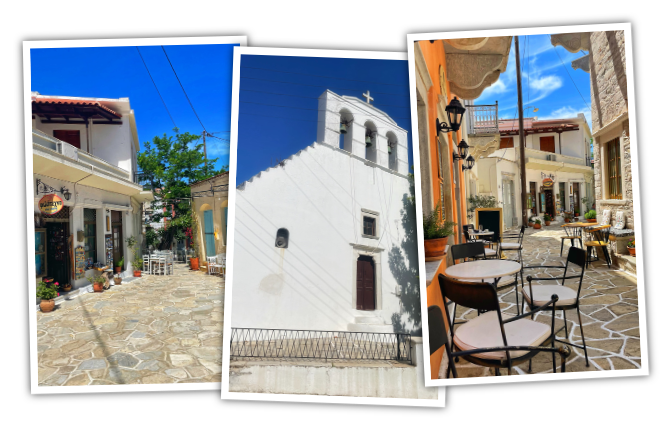
    On the slopes of Mount Zas, Filoti is one of the largest villages on the island, and it spreads down the hillside in tiers of white houses. Plane trees shade its squares, water runs from old fountains, and the cafés are perfect for a rest before or after the mountain. It’s a calm, genuine village, not made for visitors, which is exactly its charm. I spent my afternoon here waiting for the last bus back to Chora with a glass of wine or two (the cheeky shop owner slipped me one on the house).

    Halki Village in Naxos

    Halki

    Halki was once the island’s capital, and it still carries itself with quiet pride. Elegant old mansions, Venetian towers and peaceful squares line its streets, and the main road is a pleasure to stroll, with small shops and galleries on either side. In the middle of the village, a grand old mansion houses the Vallindras Kitron Distillery, and you can walk in for free. A guided tour takes you through the rooms where the liqueur is made, explains how the leaves of the citron tree become Kitron, and lets you see the equipment at work. The visit ends the way every good visit should, with a tasting of the Kitron itself and of the ouzo that’s distilled on site.

    Apano Kastro in Naxos

    Apano Kastro

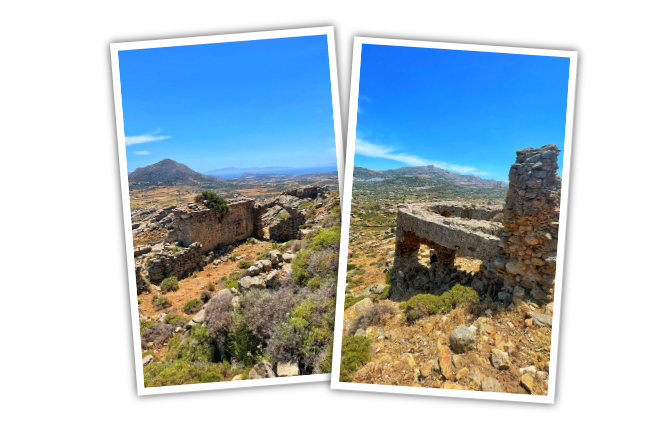
    Apano Kastro, the “Upper” Kastro, is one of the most impressive monuments on Naxos, and the hike up to it was one of my favorite parts of the trip. The ruins of this ancient castle crown a rocky hilltop, with superb views of the surrounding mountains. You can reach it from Halki, which has a bus stop, or from the other side, from the village of Ano Potamia. The way up is about 2.6 kilometers one-way, with only about 137 meters of climbing from Halki, and the whole trip takes around two hours. The huge rectangular stone blocks of the wall belong to the classical era, while the fort you see today was built by the Venetians around the middle of the 13th century. It’s called Apano to distinguish it from the Kato (“Lower”) Kastro in Chora. You can’t go completely inside, as it’s rather run down, but that only adds to the romance. I loved every minute.

    Olive Press Museum in Eggares

    Naxos has an old relationship with olives, and the village of Eggares, set in a green valley, keeps that story alive in its Olive Press Museum. Here you can see how oil was once made with stone, wood and muscle, long before modern machines. It’s a small, charming stop, and a good way to understand why the olive groves around you matter so much to the island. Eggares is a little off the main routes, so it suits travelers who rent a car or who are staying five to seven days, with time to explore beyond the usual stops.

    Archaeological Museum

    Inside the old Kastro in Chora, the Archaeological Museum gathers treasures from the island’s long past, including the elegant, simple Cycladic figurines that made this part of the world famous thousands of years ago. The setting, in an old building within the medieval walls, is part of the experience. It’s an easy visit, worth doing on a hot afternoon.

    Site Museum of Naxos Mitropolis

    Beneath the square of the Mitropolis in Chora, the cathedral, lies an archaeological site that reveals layers of the ancient town, one built on top of another over many centuries. Walking through, you see how much history is hidden under the everyday life of Chora. It’s a quiet, thoughtful stop, and a pleasant surprise for anyone who thinks they’ve already seen the center.

    Temple of Demeter in Sangri

    In the fertile countryside near Sangri stands the Temple of Demeter, the goddess of the harvest, a reconstructed temple from the 6th century BC rising among the fields. It’s a peaceful site, with the sound of birds and wind, and the setting feels perfectly suited to its purpose. A small museum next door tells more of its story. Sangri is a little off the main routes, so this stop suits travelers with a rental car or a longer stay. If you’re relying on buses, or have only three days on the island like I did, it’s the one to leave off your list.

    Apiranthos

    High in the mountains, Apiranthos is one of the most beautiful villages on Naxos. Its streets are paved with marble and lined with stone houses, towers and small squares where the villagers still sit and talk. Several little museums are tucked among the lanes, and the village has its own character and dialect. Come for a slow walk, a coffee on a shaded terrace, and a sense that time moves differently up here.

    Closing Thoughts

    Naxos is a generous island: sunsets at the Portara, marble lanes in the mountains, ruins on a hilltop, a glass of Kitron at the end of the day. It gives a little of everything, a lively harbor town, quiet villages high above the sea, trails that lead to castles and summits, and long afternoons that are best spent doing very little. Take your time, rent a car or ride the buses, and leave room for detours, because the best moments tend to happen on the way to somewhere else. Even a short stay is enough to fall for it, and you’ll leave already planning the next visit.

  • What to Do In Paros: The Quiet Island of Marble, Sunsets and Small Discoveries

    What to Do In Paros: The Quiet Island of Marble, Sunsets and Small Discoveries

    Paros sits quietly in the middle of the Cyclades, an island that doesn’t shout for attention but earns it slowly. Whitewashed lanes in Parikia and Naoussa wind past blue doors and bougainvillea. Fishing boats rock in a harbor that still smells of salt and grilled octopus. Inland, the marble village of Lefkes climbs a hillside, where the stone underfoot is the same pale marble the island was once famous for. The beaches range from calm, shallow coves to long golden stretches where the summer meltemi wind fills the sails of windsurfers and kitesurfers. Whether you come for the sunsets, the tavernas, or the long, unhurried days, Paros makes it easy to do a little less and notice a lot more. Here is what to do while you’re there.

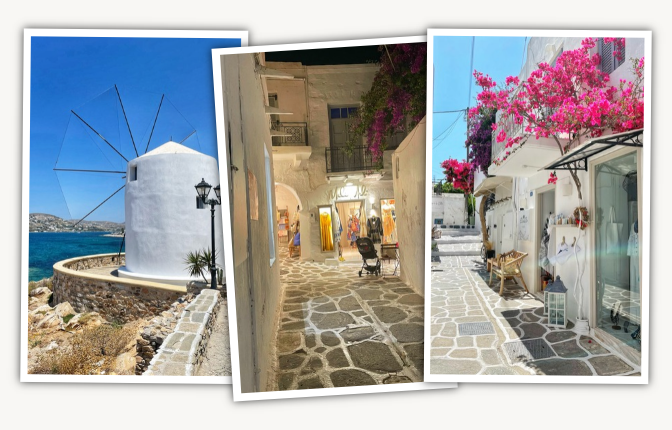
    Collage of 3 pictures - a windmill near Parikia, evening shot of cobblestoned streets in Parikia and sunlit street with pink bougainvillea

    Parikia

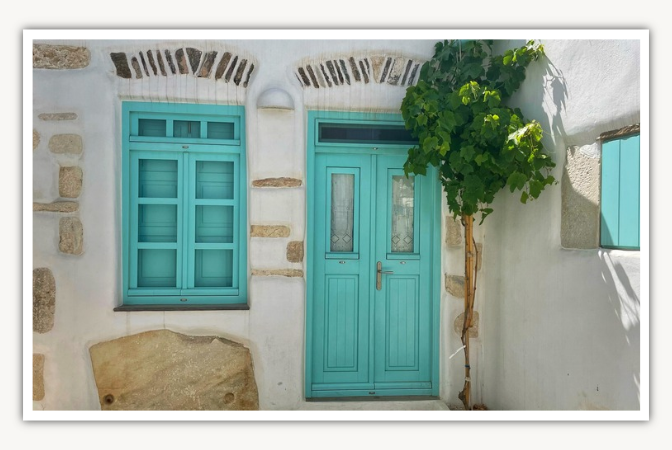
    Parikia is the kind of town that rewards you for walking without a plan. Its whitewashed lanes twist past blue doors, bougainvillea and tiny chapels, then open without warning onto the harbor, where the evening light turns the stone gold. When the walking is done, find a table in a side street, order a glass of local wine and a few small plates of tapas, and let the moments stretch out for as long as they like.

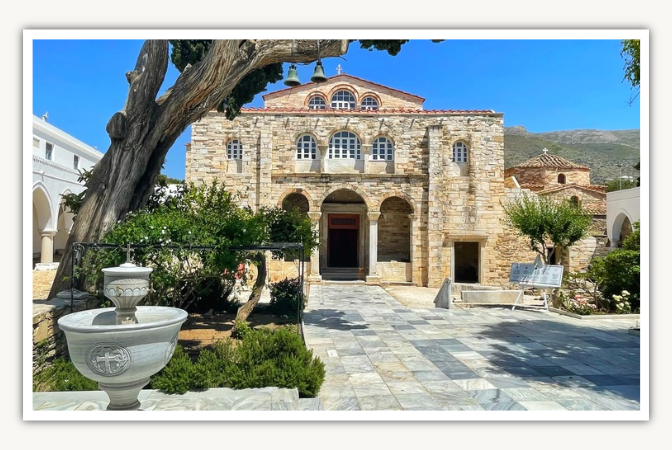
    Courtyard of the Monastery of Panagia Ekatontapiliani in Parikia, Paros

    Monastery of Panagia Ekatontapiliani

    Near the edge of town stands the Monastery of Panagia Ekatontapiliani, the “Church of a Hundred Doors,” one of the oldest Byzantine churches in Greece. According to tradition, it has 99 doors that you can see and a hundredth, secret one that will open when the church of Hagia Sophia in Constantinople (Istanbul) is Orthodox again. Its quiet courtyard and soft, aged stone are worth a slow wander, and the cool, calm interior makes a good pause on a hot day.

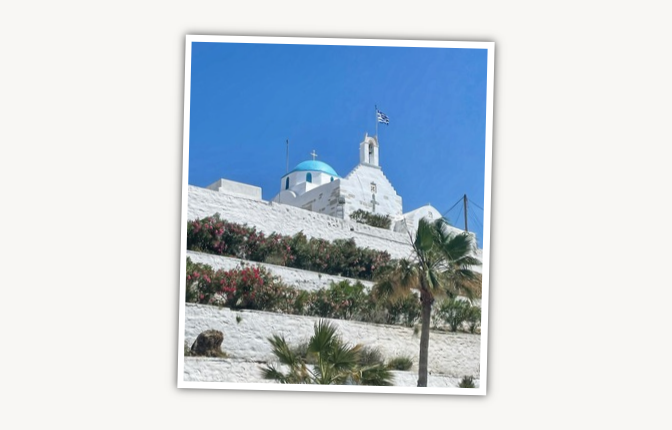
    Agios Konstantinos Church near the Frankish Kastro

    Frankish Kastro

    Rising above the lanes, the remains of the Frankish Kastro tell a story of many ages. Columns taken from an ancient temple were built straight into its walls, so as you walk past, you’re looking at stone that has served for more than two thousand years. It’s a lovely place to pause at the end of the day, when the sun is low and the view over the roofs and the sea turns warm.

    Archaeological Museum of Paros

    Just a short walk away, the Archaeological Museum of Paros gathers the island’s long history under one roof, from sculpture carved in the famous Parian marble to everyday objects of the people who lived here long ago. It’s small enough to enjoy without hurrying, and a good way to understand how old and layered this quiet island really is. Very close by is also the Byzantine Museum of Paros, if you need to soak in a little more history.

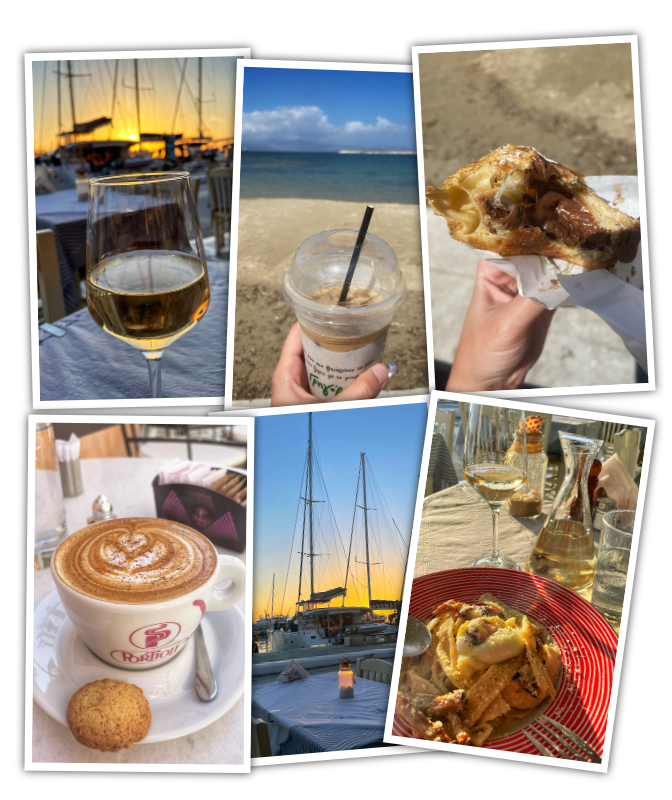
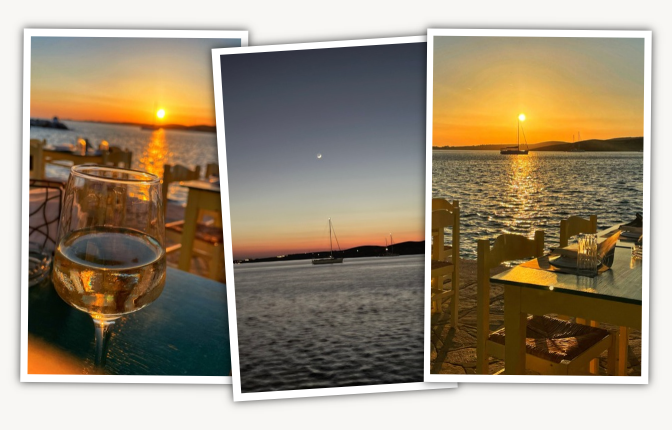
    Sunset lit sea view pictures, wine and dine

    A Tip to End the Day

    When the sightseeing is done, save the evening for a slow dinner by the harbor. Choose a table close to the water, order something simple and local, and let the day wind down at its own pace. As the sun sinks toward the horizon and the sky turns from gold to rose, the soft waves lap at the quay and the boats rock gently in their moorings. There’s no need to rush the bill or the view. This is the moment when Paros feels most like itself: unhurried, warm, and quietly beautiful.

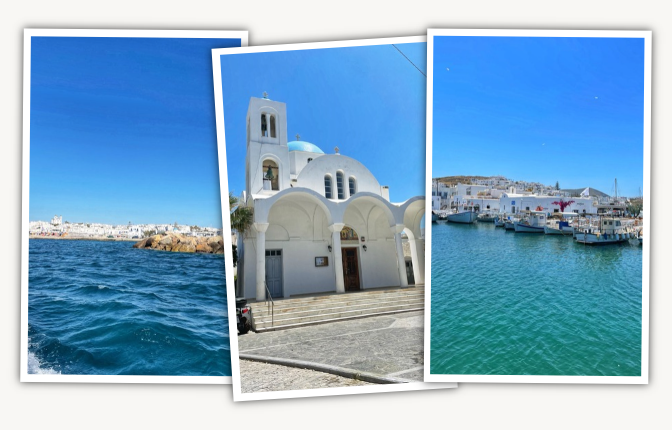
    Naoussa view from the sea, blue domed church

    Naoussa

    Naoussa is Paros’s other great town, a fishing village that wraps around a small, lively harbor. Colorful boats rock beside the quay, tavernas spill onto the waterfront, and the lanes behind it fill with white walls, flowers and boutiques. Many people prefer it to Parikia, drawn by its buzz, its restaurants and its evening glow. I’m not one of them, I find Parikia more authentic and relaxed. That being said, Naoussa is still worth an afternoon, an evening or a day of your time, especially if you enjoy a livelier atmosphere.

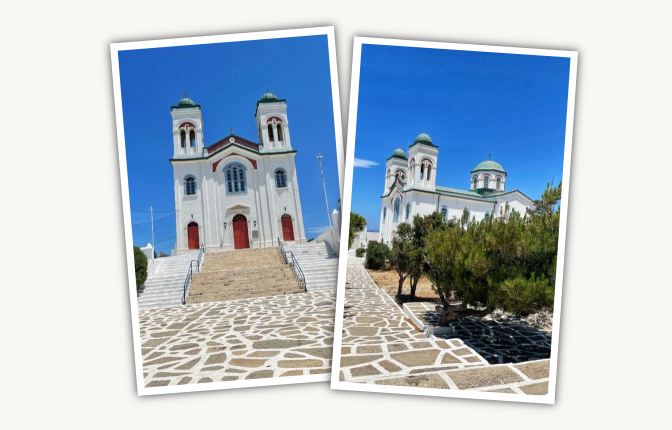
    Church of the Assumption of the Virgin in Naoussa

    Church of the Assumption of the Virgin

    Climb through the lanes to the highest point of the village, and you’ll find the Church of the Assumption of the Virgin. The walk is part of the pleasure, with tiny doorways, steps and chapels appearing around each turn, and the reward at the top is a quiet space above the rooftops, with a wide view down to the harbor and the sea beyond. It’s an especially good place to stop when the light is soft.

    Venetian Fort in Naoussa

    Venetian Fort

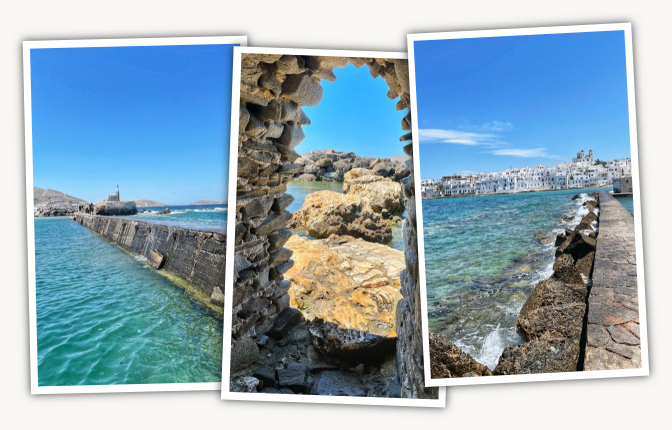
    At the mouth of the harbor, the weathered remains of the Venetian Fort rise right out of the water, a reminder that this peaceful fishing village once needed protection from pirates. Only part of it has survived, with old stone walls and arches softened by sea and sun, but it’s easy to picture how it once guarded the bay. Walk out along the quay, watch the small boats slip past, and look back at the white houses curling around the harbor. It’s most beautiful toward evening, when the light turns golden and the sea laps gently against the old stones.

    Harbour and Waterfront in Naoussa

    Harbour and Waterfront

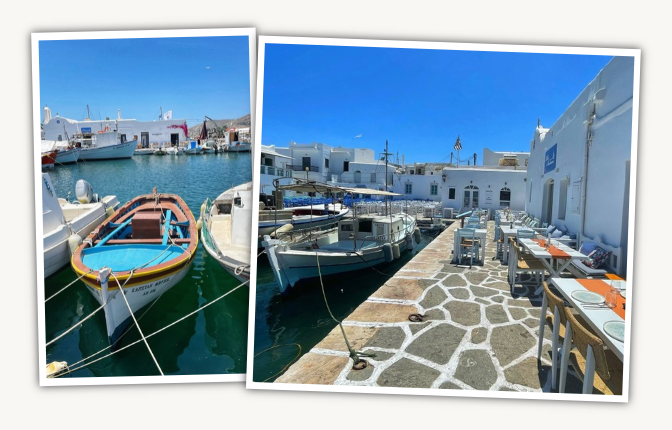
    Naoussa’s harbor is the heart of the village, and the best way to enjoy it is slowly, with lunch as the centerpiece of the day. Fishing boats in blue, red and white sway beside the quay, nets are folded in the sun, and the waterfront tavernas set their tables almost at the water’s edge. Choose one, settle in, and order a few plates to share: grilled octopus, fresh fish of the day, a Greek salad, and a glass of cold white wine. Lunch here is never rushed. Between courses, you can watch the boats come and go, listen to the quiet slap of the water, and look across to the old Venetian Fort. Afterward, a walk along the waterfront, with an ice cream or a coffee in hand, is the perfect way to let the afternoon drift.

    Kolympethres Beach in Paros

    Kolympethres Beach

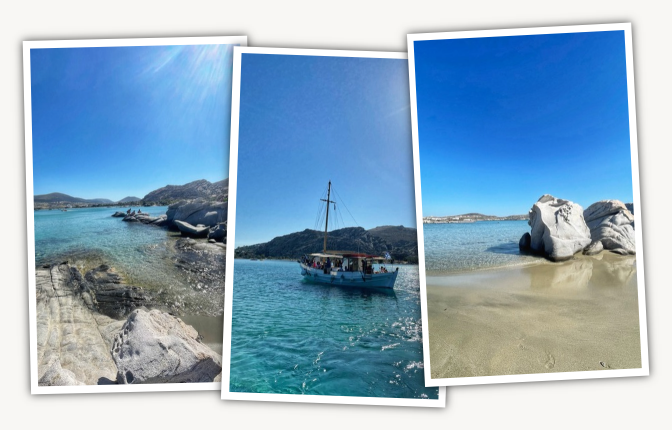
    Kolympethres is one of the most famous beaches on Paros, and it’s easy to see why. It lies on the wide bay of Naoussa and its shores are framed by huge granite boulders that the sea and wind have been carving for centuries into smooth, strange, almost sculpted shapes. Between these rocks, small sandy coves open up, each with clear, shallow water that seems made for slow swims and long afternoons. Many people count it among the most beautiful beaches in Greece (and I definitely agree). Half the pleasure is getting there: a small boat leaves from the port of Naoussa and carries you across the bay, with the white houses shrinking behind you and the sea glittering below. Arrive with time to spare, find a quiet nook among the stones, and let the day pass with nothing more to do than swim, sunbathe and wonder at what the sea can create.

    Lefkes Village in Paros

    Lefkes

    Leave the coast behind, and Paros shows you a quieter face. Lefkes lies in the heart of the island, about eleven kilometers southeast of Parikia, and clings to a green hillside of olive and pine trees about 300 meters above the sea. From up here, the view stretches all the way across the water to Naxos. This small village of around 500 people was once the capital of Paros in the Middle Ages, and it still has the look of a place that values its past: whitewashed houses mixed with Venetian architecture, churches dating from the 15th century, white windmills, and charming dovecotes. Mass tourism hasn’t taken over, so Lefkes feels authentic and unhurried. Wander slowly, then stop at the Church of Agia Triada (Holy Trinity), the main church of the village. This Byzantine church is built from fine white marble that glimmers in the sun, and it holds rare and valuable icons. If you have time, the Folk Art Museum shows the local tools and clothing that once filled everyday life here.

    Byzantine Road in Paros

    The Byzantine Road

    From the village, an old paved footpath from the Byzantine era leads down toward the village of Prodromos and ends at the sea. It’s about 3.7 kilometers long and takes around an hour, mostly downhill, which makes it an easy and gentle walk that most people can enjoy. What makes it special is the ground beneath your feet. You’re walking on the same road, over the same marble, that travelers have used since Byzantine times, and it has survived all those centuries of weather, footsteps and change. It’s quite incredible to follow the very path that people took so long ago, with quiet groves around you and the glimmer of the sea ahead. Wear comfortable shoes, bring water, and take your time. The journey is the reward.

    Antiparos Island

    Antiparos: A Small Island Next Door

    Just across a narrow strip of water from Paros lies Antiparos, a small island in the heart of the Aegean that feels a world away. It belongs to the Cyclades, yet it’s far less crowded than its famous neighbor, with a relaxed, slightly cosmopolitan spirit that makes it ideal for slow, unhurried days far from the hustle and bustle. Start the day with a slow breakfast at one of the cafés near the port, where you can watch the ferries come and go while the island wakes up around you. Antiparos is known for its beaches, which are mostly sandy, with crystal-clear water, and many are within walking distance of Chora, so swimming is one of the best things to do here. On the southern side of the island, you’ll find its most impressive sight, the Antiparos Cave, a stunning underground world of stalactites and stalagmites. Back in Chora, the island’s capital and its beating heart, whitewashed Cycladic houses line the lanes, and most of the hotels, restaurants, bars and tavernas are found here. Don’t miss the Venetian Castle and Fortress, a quiet reminder of the island’s past.

    How to Get There: Getting to Antiparos is easy and part of the fun. Buses run from Parikia and other towns to the small port of Pounta, where the ferries to Antiparos depart. The crossing takes only about seven minutes, which makes it possible to visit for a day, or to linger much longer.

    Closing Thoughts

    Paros is an island of small, quiet pleasures: lanes in Parikia that invite a wander, evenings at the harbor in Naoussa, granite and sea at Kolympethres, the old stones of the Byzantine Road above Lefkes, and the short boat ride across to Antiparos. None of it demands to be rushed. The best days here are the ones with no plan, long lunches, a swim when you feel like it, and a sunset that you stay for. Take what you like from these pages, leave room for surprises, and let the island set the pace. Some places stay with you long after you’ve left, and Paros is one of them.